A Late-Autumn Garden Visit, Read Through Shape and Texture
A late-autumn garden visit can feel rewarding after flowers fade: choose a comfortable route, notice seed heads and enjoy the garden’s seasonal details.
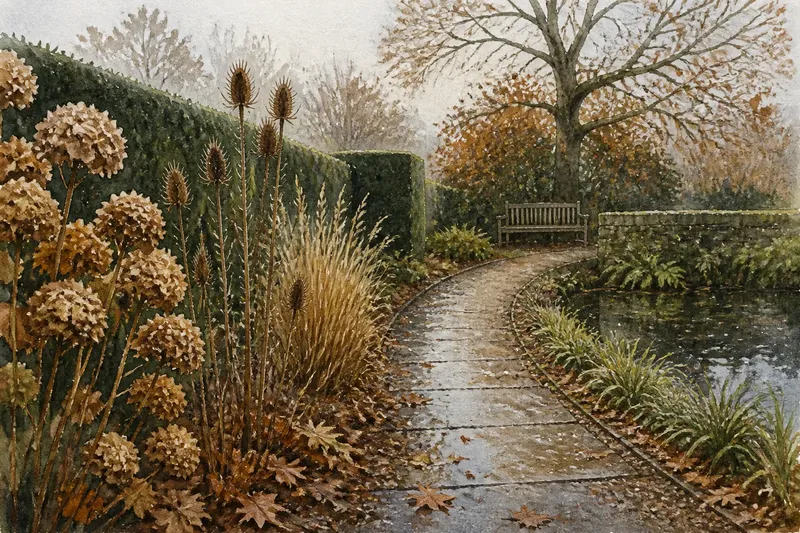
The common mistake on a late-autumn garden visit is to expect summer’s bright borders; the cost is overlooking the season’s quieter details and sometimes choosing a muddy route in pursuit of them. A little planning around paths, shelter and what remains standing makes the outing easier to enjoy.
Late autumn changes the garden’s emphasis. Seed heads, bare branches, clipped hedges and rain-darkened surfaces become more visible once many flowers have faded. The visit works best when you can see those details without rushing or putting your footing at risk.
Plan a late-autumn garden visit around the paths
Before setting out, check the garden’s opening arrangements and any notices about path closures or access. If the venue publishes a map, look for a firm route with places to shelter or sit. After rain, a maintained path is usually a better choice than a shortcut across grass or a steep, leaf-covered slope.
Wear comfortable shoes with a dependable tread, and bring a warm layer and a coat suited to the forecast. A small cloth can be useful if you want to dry a bench, but sitting is optional; a short walk with pauses can be enough.
Use this quick route check before you leave:
- If the map shows a firm paved or gravel path, choose it; if it includes a closed or steep section, plan a different loop.
- If recent rain has left the lawn soft or muddy, stay on maintained paths; if those are also slick, shorten the walk or postpone it.
- If the forecast suggests drizzle, bring a coat; if wind or rain would make an exposed route unpleasant, favour sheltered paths or visit another day.
- If the venue lists limited access or temporary closures, check its latest notice; if the route you need is unavailable, choose an accessible alternative or another garden.
- If there is a sheltered bench along the route, keep it as an optional pause; if it is wet or exposed, continue walking instead.
- If your shoes feel insecure on the first stretch, turn back to a firmer route; if no safe-feeling path is available, end the visit rather than taking a slippery shortcut.
Notice the garden’s structure after the flowers fade
Start with the large shapes: the curve of a path, the line of a clipped hedge, a tree’s bare outline or a wall dividing one part of the garden from another. These features give a sense of how the space is arranged. A gravel path beside a broad lawn reads differently from a brick walk enclosed by shrubs, even when neither has flowers in bloom.
Then look at the smaller contrasts. A pale stem against a dark hedge, rough bark beside smooth leaves, or dry grasses above damp stone can make a familiar corner feel distinct. You do not need to name every plant. The visible differences are enough to make the walk specific to the season.
Read seed heads as shapes, not faded flowers
Seed heads often hold their outline after petals are gone. Some form clustered globes, while others branch into fine sprays or stand as dark vertical marks against pale grass. Looking from the path’s edge can help separate their shapes without stepping into planted beds.
Imagine you reach a border where dried stems seem tangled together. You step back to the path and view the plants from the side rather than looking down into them. The expected result is a clearer view of separate stalks and the hedge behind them; if the border still looks dense, move on rather than forcing a close inspection.
Stay on public paths and avoid touching plants, especially if you do not know what they are. A change of viewpoint is usually enough to see how a stem bends, branches or catches the light.
Keep the outing comfortable when the ground is wet
Wet leaves can conceal slick paving, and soft ground can make a lawn route tiring. Watch the surface ahead, keep to maintained paths and leave steep shortcuts alone. If a section feels slippery, choose a safer route or turn back; there is little pleasure in reaching a viewpoint at the expense of secure footing.
Dampness can still add interest from a safe distance. Moss on a wall, rain-darkened bark and leaves gathered beside a drain show how stone, wood and foliage take on different appearances in wet weather. Look without stepping off the path or reaching into planting.
If the weather changes, make the walk flexible. A pocket notebook can hold a quick sketch or a few words, but it is not essential. You can also keep moving and notice how grasses shift in a gust or how fallen leaves collect against a fence.
Give the walk a simple route without turning it into a task
A loose theme can make a visit feel coherent without requiring a list of sights. You might follow the path’s changes in material, or notice how different plants hold their outlines. Think of the path like the margin of a book: it gives the walk a clear edge while leaving room for details to catch your eye.
Say you have an hour before lunch, the garden map shows a firm loop past a hedge and pond, and the forecast calls for light drizzle. You choose shoes with a steady tread, bring a coat and decide to notice contrasts between stems and backgrounds. At the hedge, you pause to compare upright seed heads with the dark foliage; by the pond, the path is slick, so you stay on the firmer section and skip the close view. The result is a complete, comfortable walk with two clear observations, rather than a detour onto uncertain ground.
What should you know before a late-autumn garden visit?
Which textures stand out after flowers fade?
Look for rough bark, smooth leaves, dry grasses, gravel and damp stone. Their contrast is often easiest to see where a path meets a border or wall.
Are seed heads worth looking at in late autumn?
Yes, as lasting shapes rather than faded versions of flowers. Branching stems and clustered heads can stand out against a hedge, lawn or pale sky.
What should I wear for a garden visit in late autumn?
Choose comfortable footwear with a steady tread, warm layers and a coat suited to the forecast. Check the garden’s own information for opening arrangements, access and path restrictions before setting out.
How long should I spend in the garden?
Stay only while you remain comfortable and the paths feel manageable. A short walk with a few pauses can feel complete; if weather or footing becomes unpleasant, leave early.
A late-autumn garden visit is easier to enjoy when the route suits the ground as well as the weather. Check the venue’s latest access information, stay on paths that feel secure and let a few seasonal details be enough.