Garden, Gallery or Market: Choosing an Outing by the Attention It Asks
Choose a garden, gallery or market outing by the attention it asks, so the pace, conversation and focus suit your mood rather than fight it.
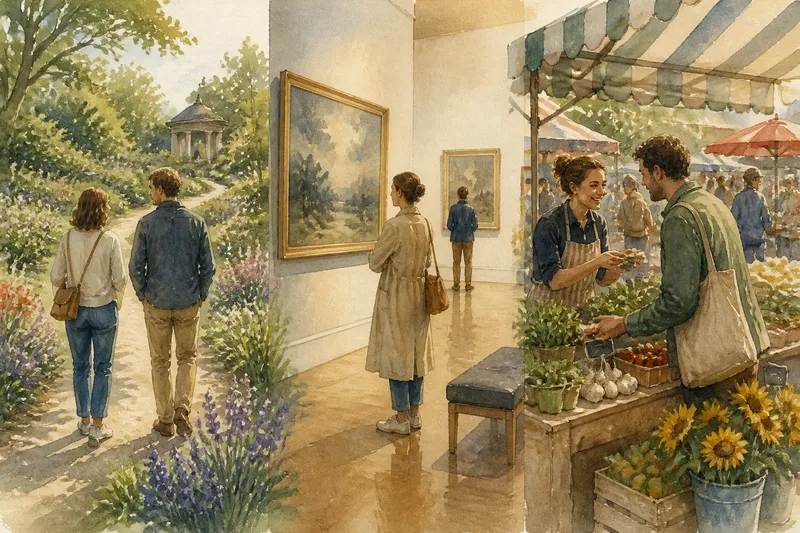
The common mistake with a garden, gallery or market outing is choosing by destination alone; the cost is a few hours spent wishing for a different pace. A garden asks you to notice change across a broad landscape, a gallery gathers attention around selected works, and a market keeps it moving between stalls and people. Match that kind of attention to your mood, and the same free afternoon can feel easy rather than demanding.
Choose the kind of attention you have to spare
Before setting off, ask what you would enjoy noticing. Do you want to wander without a sequence, pause over a few concentrated details, or keep scanning for something unexpected? Those preferences are more useful than a general desire to “get out”.
It can help to think of attention as a torch. In a garden, its beam sweeps across a changing scene; in a gallery, it rests on one subject; in a market, it flickers between colours, voices and choices. None of these demands is better. The right one depends on whether you feel curious, contemplative or ready for bustle.
Consider company, too. A companion who likes to talk as they walk may enjoy a garden path or a market lane. Someone who prefers a quiet pause may find a gallery more comfortable, provided you agree that silence is part of the outing rather than a sign that conversation has failed.
A garden gives attention room to roam
A garden is well suited to a day when you want movement without a strict route. Beds, paths, trees and open lawns offer shifting subjects, and you can decide where to linger as you go. The experience is broad rather than tightly framed: one moment you might notice a colour combination, the next a path curling out of view.
This loose focus leaves room for conversation. You can talk while walking, fall quiet when something catches the eye, then pick up the thread farther along. It works particularly well for companions who enjoy noticing different things and comparing impressions without needing to reach the same conclusion.
Choose this style when unhurried wandering sounds pleasant and the day’s conditions suit being outdoors. If your mood calls for close attention, or you would rather not deal with changing weather, a gallery may be a better fit. For a garden visit, let curiosity set the route instead of trying to see every corner.
A gallery makes looking the main activity
A gallery offers a more concentrated kind of attention. Rooms often group works in ways that invite comparison, and the display gives you a clear subject to return to: a painting’s arrangement, the texture of a sculpture, or the contrast between two objects. You can move at your own pace, but the surroundings encourage you to look before moving on.
That focus can make conversation more deliberate. Instead of chatting continuously, you might share a brief observation, look in silence, then discuss what stood out. If you are going with someone, agree that you can separate for a short while and meet again at a natural point. That keeps different looking speeds from turning into a negotiation at every room.
Pick a gallery when you want a contained outing with a clear visual centre. It may feel less satisfying if your best mood is energetic and sociable, or if the pleasure you seek is browsing without a single subject to hold your attention. You do not need specialist knowledge to enjoy looking: a simple question such as “What did I notice first?” is enough to begin.
A market keeps attention lively and social
A market asks for quick, changing attention. Stalls display food, flowers, crafts or household goods; sellers and other visitors add movement and sound. You can browse, stop to ask a question, or carry on when something does not appeal. The pleasure lies partly in the sequence of small discoveries rather than in studying one thing for long.
Conversation tends to happen in bursts. You might discuss a loaf or a bunch of herbs, then be drawn towards another stall. That makes a market a natural choice for people who enjoy talking as they go, though it can be tiring if you are craving quiet or dislike making small decisions in a busy setting.
Give yourself a simple purpose if open-ended browsing feels too scattered: perhaps you want to look at seasonal produce or find a small gift. Treat it as a point of interest, not a shopping obligation. You can enjoy the atmosphere without needing to buy anything.
Use the week to choose the right outing
A small check-in across the week can make the choice clearer without turning leisure into a project. Early in the week, notice what kind of attention sounds restorative: open-ended, concentrated or lively. A few days later, ask whether that still fits your energy and company. On the day itself, make the final choice based on how you feel and what the conditions allow.
Say you have been sitting indoors and feel restless, but you also want an easy conversation with a friend. A garden may suit that combination: you can walk, talk and let the route unfold. If, by the day of the outing, you feel eager to focus on details instead, you might choose a gallery. The useful result is a plan that responds to your actual mood, not an idea of what you ought to enjoy.
Keep the arrangements light. Check opening information and access details before leaving, then decide how much structure you want once you arrive. A garden can remain unplanned; a gallery visit can centre on one room or display; a market outing can be a relaxed browse. The destination matters, but so does the permission to change pace.
Which outing suits your mood?
Which outing leaves the most room for conversation?
A garden usually makes it easiest to talk while moving, with natural pauses when something catches your eye. A market also invites conversation, but its bustle and frequent stops can make it more fragmented.
Which choice suits a quiet, focused afternoon?
A gallery is often the clearest fit because its displays give attention a concentrated subject. A garden can be quiet too, but its variety may encourage wandering rather than sustained looking.
What if you cannot decide between a garden and a market?
Ask whether you want to observe a setting or browse among people and goods. Choose the garden for space and a looser route; choose the market for activity, quick discoveries and brief exchanges.
Can a gallery visit still feel relaxed?
Yes: set a gentle pace and allow yourself to linger where your interest naturally settles. You can leave a room or pause the conversation whenever you feel ready, without trying to examine everything.
Let the day’s attention make the decision
A garden, gallery or market can all make a satisfying outing, but each asks for a different way of being present. Garden paths suit attention that wants room to roam; gallery rooms suit a closer gaze; market stalls suit a lively, shifting focus. When choosing a garden, gallery or market outing, start with the kind of attention you can comfortably give, then let the place support it. That small decision is often enough to make an afternoon feel like time well spent.