From Calling Card to Open Invitation: How the Weekend Visit Changed
How the weekend visit changed from formal calling customs to flexible plans, and how clear invitations make time together easier for guests and hosts alike.
The most common mistake with a weekend visit is assuming that “drop by” means the same thing to everyone. The cost is small but real: a host may put an afternoon on hold while a guest waits for a firm invitation. How the weekend visit changed is less a story of one custom replacing another than of visiting signals becoming less formal and more dependent on conversation.
Calling cards, home visits and modern messages belong to different social settings, and none tells the whole story for every household or period. Rather than treating them as a neat historical sequence, it is more useful to see how each offered its own way to signal welcome, set expectations and arrange a meeting.
Calling cards made an attempted visit visible
In some settings, a calling card served as a small record of a social call. A visitor could leave one when the person they hoped to see was unavailable, signalling that they had called without requiring the household to interrupt its routine. The custom offered a recognisable form, though its use varied by place and social circle.
That kind of ritual made an intention easier to read. It also carried expectations about manners and reciprocity: a call might invite a return call, and the details of greeting and departure mattered. Such conventions could help acquaintances navigate a visit, but they could also make the encounter feel like an obligation.
There is no need to imagine a single point when cards vanished and casual visits began. A safer account is that different ways of arranging visits have overlapped, with habits shaped by local custom, household routines and personal preference.
Home visits gave way to more choices of setting
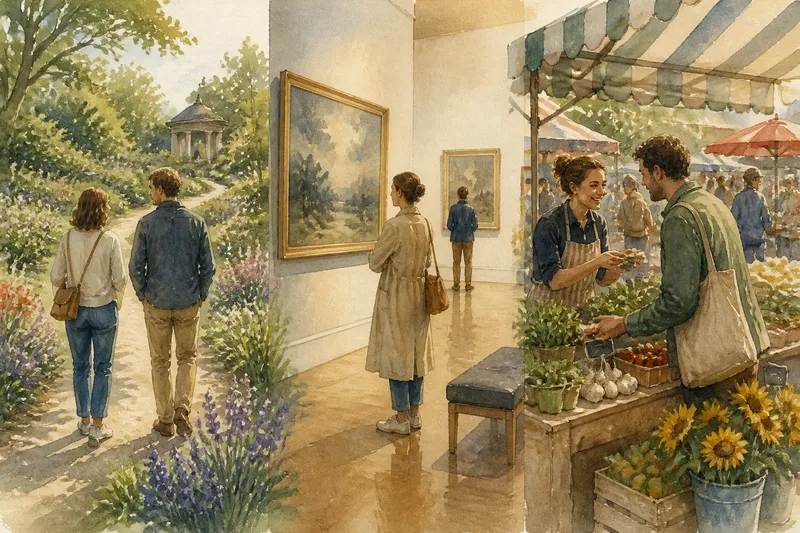
A visit at home makes the host’s space part of the occasion. The kitchen table may invite a long conversation; a sitting room may feel more formal. Meeting at a café, market or on a walk changes the rhythm and can spare either person the work of hosting at home.
These settings do not mark a universal historical progression. They are options people can choose according to the conversation they want and what feels comfortable. A café offers an easy endpoint, while a walk allows pauses and movement; neither is automatically more thoughtful.
Say you want to catch up with a friend whose home is busy. You suggest meeting at a familiar café for tea, and they agree. The concrete result is a plan with a clear place and a natural way to wrap up, without either person needing to prepare a home for company.
Messages made invitations easier to send and easier to misread
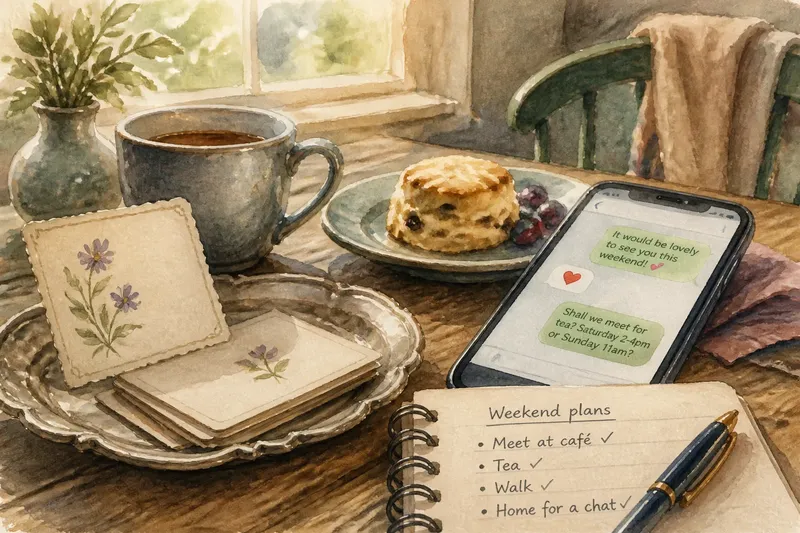
A spoken invitation or note has its own cues, while a text or group message can be sent quickly and answered later. That convenience does not always make the meaning clear. “We should have you round sometime” can express affection without setting a date; “Are you free Saturday afternoon for tea?” gives the other person a specific plan to accept or decline.
Imagine you message a friend, “It would be lovely to see you this weekend,” and they reply with a heart but no date. Treat that as warm interest, not a confirmed visit. You follow up with two possible times and ask which suits; the result is either an agreed plan or a clear opening for them to suggest another day.
For a group invitation, name who is included, whether children or partners are welcome, and whether you need a reply before preparing food. These details work like labels on jars: they make the contents easier to recognise without adding ceremony.
Informal hosting still benefits from clear signals
Casual hospitality can mean mugs that do not match, a lived-in kitchen and no elaborate spread. But informal words can still leave people guessing. “Don’t bring anything” may be a complete answer, while “come whenever” may mean a broad window rather than any hour of the day.
Hosts can say what would genuinely help: “Tea will be ready when you arrive; there’s no need to bring food.” Guests can offer once to contribute something small, then accept the answer. A clear place to sit and an unhurried welcome matter more than making the house look staged.
Time is another signal that is kinder to state than to leave unspoken. “Come round for tea between two and four” gives both people a useful frame. If the host has more flexibility, they can say so; if a guest needs to leave before supper, mentioning that in advance prevents an ordinary goodbye from becoming a guessing game.
There is no universal correct length for a visit. The purpose, energy, travel and circumstances of the people involved all shape what feels comfortable. A stated time window is a boundary, not a measure of affection.
Why do weekend visits still feel awkward?
Does “drop by” mean I can arrive without asking?
Not necessarily. Some people mean an unannounced visit; others mean they would be glad to see you once a time is agreed. A quick message before setting off clarifies which meaning applies.
Should a guest bring food or a gift?
There is no single rule for every household or occasion. Ask whether a small contribution would be useful, then accept the host’s answer without insisting.
How can I end a visit without seeming rude?
Say plainly that you need to leave by a particular time or have another commitment. A warm goodbye and thanks for the company make the ending clear without turning it into a judgement on the visit.
Is an open invitation the same as a confirmed plan?
No. An open invitation expresses welcome, while a confirmed plan names a time both people have accepted. If you are unsure, ask before making preparations.
How the weekend visit changed is best understood through the signals people use, not as a tidy march from strict rules to total informality. A specific phrase about place, timing or food can make an invitation feel relaxed without leaving its meaning obscure. When those details are clear, spontaneity becomes a choice rather than a burden placed on the other person.