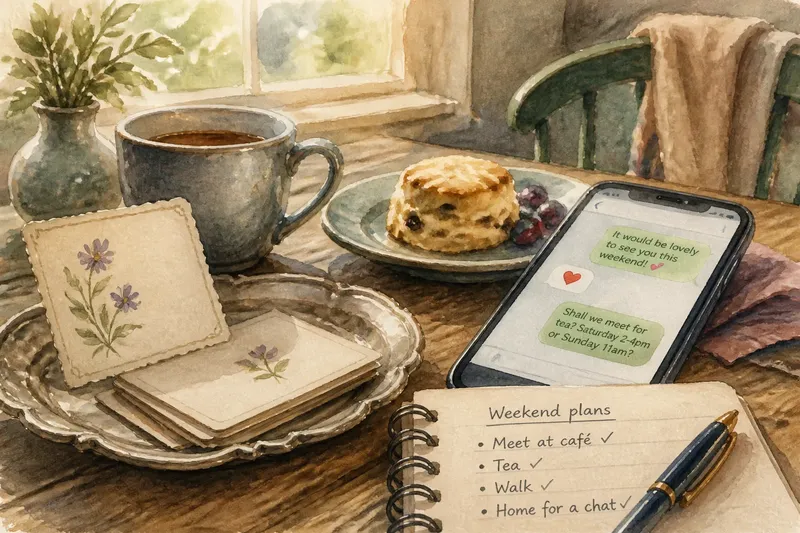
The One-Anchor Weekend: Why a Single Plan Gives the Day Shape
A one-anchor weekend gives the day direction without filling every hour, helping you choose a plan that suits your energy and leave room for detours.

The common weekend-planning mistake is to book one pleasant idea after another, until a day off feels like a timetable with better scenery. A one-anchor weekend avoids that squeeze: choose a single point in the day, then leave the surrounding hours open. The plan gives the day direction; the unclaimed time makes it feel like yours.
An anchor might be a morning walk to a particular viewpoint, a matinee, lunch with a friend or a visit to a local market. It is not a command to fill every gap around it. Think of it as a coat hook: it gives the day somewhere to hang, without deciding what every other part must look like.
One anchor can shape the day without claiming it
A useful anchor has a clear centre and a manageable commitment. You know what you are choosing, but you do not need to script the before and after. That distinction matters. “Go to the market” can be the whole plan; adding a timed coffee, a second destination and an evening booking may turn it into a chain of obligations.
Leaving space is not the same as being unable to decide. It means that some choices are deliberately postponed until you have slept in, checked the weather or noticed what your mood is doing. If the market is lively and you feel sociable, stay for a wander. If it is busy and you want quiet, head home for a book.
The anchor also helps people sharing a day off. It can offer a common point without requiring identical tastes for every hour. One person might be keen to walk; another may prefer a leisurely breakfast. They can meet for the walk, then part ways or choose what comes next.
Choose an anchor that fits the kind of weekend you need
There are several sound ways to build a one-anchor day. The best fit depends less on the activity’s prestige than on what you want the day to provide: company, a change of scene or genuine rest.
A fixed-time anchor suits people who enjoy a clear beginning
A cinema screening, booked lunch or scheduled class gives the day a firm point to organise around. Choose this approach if you find that a definite departure time helps you get moving, or if the activity depends on a booking. Keep the rest loose: a gentle breakfast beforehand and no automatic second appointment afterwards.
This option is less comfortable if travel or punctuality tends to make a day feel pressured. The anchor should be the enjoyable event, not a series of tense calculations about connections and arrival times. If the route requires careful coordination, decide in advance whether that preparation is part of the pleasure or an avoidable burden.
A flexible-time anchor suits people who want room to respond
A riverside walk, a browse through a bookshop or a visit to an open garden can offer a destination without a rigid start. This works well when the weather, energy or company may change. Pick a place that remains appealing if you arrive later than expected or decide to spend less time there.
There is a trade-off: flexible plans can dissolve if the destination is vague or requires too much effort to reach. Name the place and the simple reason for going. “Walk along the canal to see the boats” is easier to act on than “get outside somewhere”.
A shared anchor suits people who want company without a full-day commitment
Meeting a friend for a walk or brunch gives both people a clear point of connection, while leaving the rest of the day open. This is a useful choice when you want to see someone but do not want to negotiate a long visit or entertain continuously. Agree on the meeting place and the activity, then let the ending remain natural unless either of you has a reason to set one.
For a group, choose something that allows conversation and does not require everyone to make the same level of effort. A relaxed café stop or an easy walk may be simpler to share than an activity that depends on specialist equipment or a fixed pace.
Use the anchor to protect unclaimed time
The anchor is only half the idea. Its value depends on the time you do not fill. Resist the urge to add a “proper” second activity just because the first ends early. A quiet interval can absorb a slow breakfast, a nap, an unplanned stop or the simple pleasure of not checking the clock.
It can help to decide what you want to keep open, without deciding exactly how to use it. You might protect the afternoon for rest, leave the evening free for whoever is around, or keep the hour after a walk clear in case you want to read. This is a boundary, not another appointment.
Say you have been looking forward to a Sunday visit to a small local museum, but you also want a restorative day. You choose the museum as the anchor, go after a relaxed breakfast, and leave the rest of the day unbooked. If you come out curious, you might browse a nearby second-hand bookshop; if you feel ready to go home, you do. The observable difference is that the visit has a place in the day without turning the whole day into an itinerary.
One anchor or a fuller plan: how do you choose?
What makes an activity a good anchor?
A good anchor is specific enough to get you out of the door and worthwhile enough to look forward to. It should also leave room around it, rather than requiring several extra commitments to make sense.
Can the anchor be a meal or a visit with someone?
Yes. A shared meal, a family visit or a picnic can be the day’s single point of connection. If the gathering needs food, transport or other arrangements, keep those preparations proportionate so they do not quietly become a second event.
What if the anchor no longer appeals on the day?
Consider whether the reluctance is ordinary inertia or a real change in what you need. You can keep a simple alternative in mind, such as a shorter walk or a quiet stop closer to home, without treating a leisure plan as a duty.
When does a fuller itinerary make more sense?
A fuller plan can suit a special occasion, visitors with limited time or a day built around several connected activities. Choose it when the sequence itself is part of the pleasure, rather than adding appointments out of anxiety that free time must be used efficiently.
Make the choice by asking what the day needs
To choose between the approaches, start with the quality you want from the day. If you want momentum, pick a fixed-time anchor. If you want flexibility, choose a destination that can be visited at your own pace. If you want connection, make the anchor something shared and keep the rest of the day open to separate plans.
Then check the practical fit: how much travel does it involve, does it depend on a booking, and will it still appeal if you wake in a different mood? These are not reasons to over-plan. They help you select an anchor that can carry the day without demanding more energy than you want to give.
The one-anchor weekend is not a rule against busy days. It is a way to make a free day feel intentional without treating every spare hour as a problem to solve. Choose one point you genuinely want to reach, and let the remaining time stay available. That open space is not a gap in the plan; it is what lets the plan breathe.